
Information &Publication Section

Directorate of Extension, SKUAST-Kashmir

The University's extension communication unit, connecting farmers with research-based technologies, innovations, and advisory services.

About the Section

Extension communication for SKUAST-Kashmir

The Information & Publication Section of the Directorate of Extension, SKUAST-Kashmir serves as the University's extension communication unit, connecting farmers with research-based technologies, innovations, and advisory services. The Section develops extension publications, technical bulletins, success stories, and multimedia content to enhance the outreach of extension programmes.

Through Krishi Radio 89.6 FM, the SOUN ZIRAAT YouTube Channel, and print, electronic, digital, and social media platforms, the Section delivers timely, reliable, and practical agricultural information to farmers, extension personnel, and other stakeholders, facilitating effective technology dissemination and knowledge transfer across the region.

Field outreach & advisory during SKUAST-Kashmir extension programmes

Recent publications

Extension Literature Library

View library
Flyer

Flyer

Published 22 Oct 2026

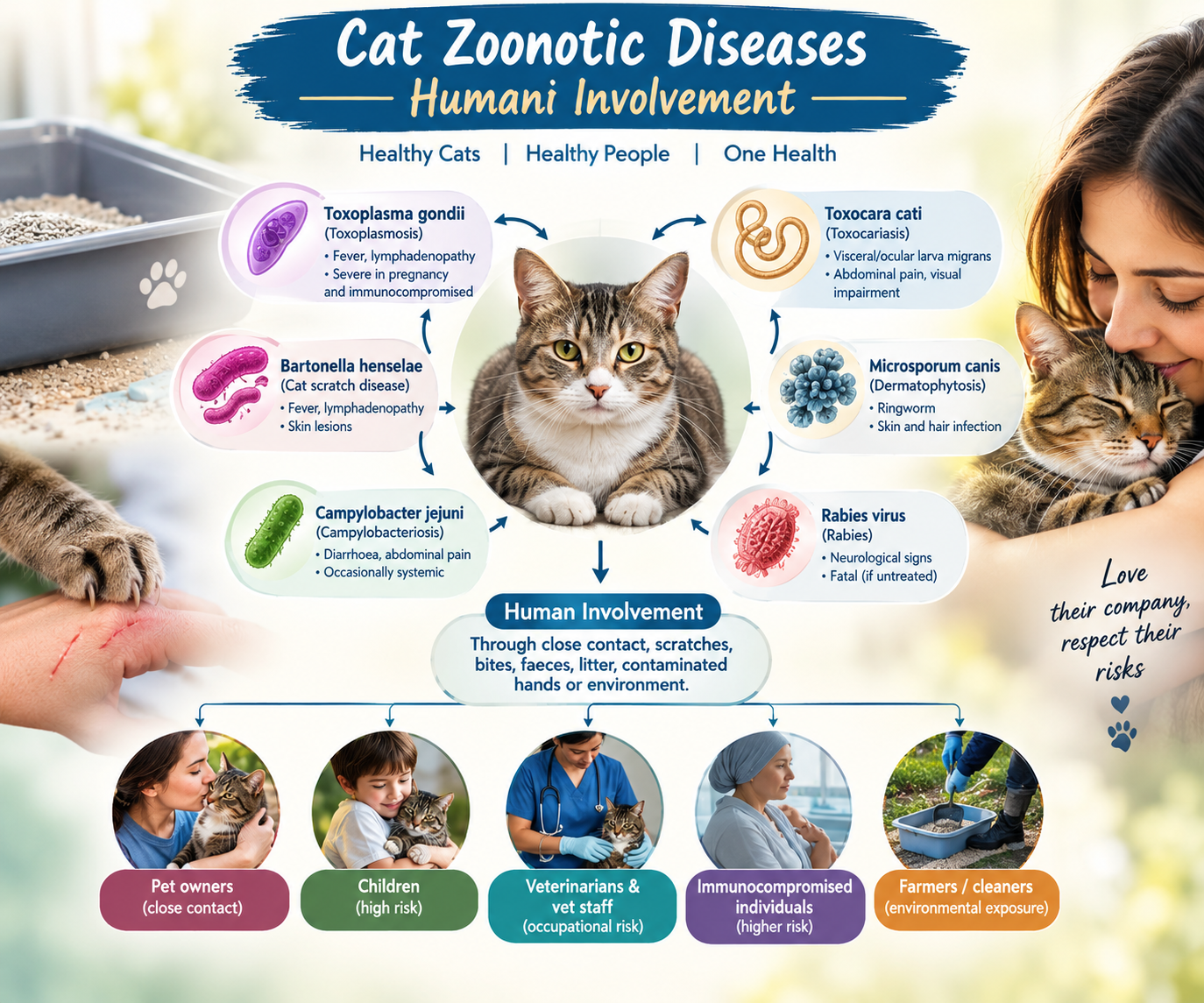
Although most feline infectious diseases only affect cats, some of these diseases can be transmitted from cats to people. Diseases that can be transmitted from animals to people are called zoonotic diseases. Here we list the most common zoonotic diseases that may be carried by cats and simple precautions that pet owners need to take to reduce risk of contracting these diseases. Zoonotic diseases are illnesses that can spread from animals to humans. The most common zoonotic diseases associated with cats are categorized into bacterial, fungal, parasitic and viral types. However below we list some common points about important zoonotic diseases of cats and their precautionary measures that pet owners need to know for avoiding any risk.

Reference
AU/DEx/518-Fl/10/2026
Contributors
Dr. Mohd. Iqbal Yatoo

Editorial stages

  1. Submission

    The author uploads a single publication file, lists contributors in order, and provides a summary.

  2. Review

    The Chief Editor assigns a reviewer, who examines the publication and records a recommendation.

  3. Revision

    Where corrections are required, the author submits a revised file with a response for the same reviewer.

  4. Publication

    The Chief Editor decides whether to publish or reject. Approved items are released in the public library.

Plant Health Clinic

Farmer mobile app

Download Farmer App