
Public archive
Extension Literature Library
Search published extension publications, including booklets, pamphlets, flyers, reports, newsletters, leaflets, and manuals, from the Information & Publication Section.
11 publications
Booklet
HEALTH TREASURES IN YOUR BACKYARDS: Green Spots for Small Land Holdings
Bhinish Shakeel, Aijaz A. Malik
Urban and peri-urban spaces are shrinking. Not only is cost of land plummetting but it is also being diverted to non-agricultural purposes like building for commercial spots. Land available for residential purposes and kitchen gardens for household food security are also diminishing. However the need to consume safe, healthy and nutritious seasonal cannot be undermined.The Indian sub-continent has a typical diet platter, especially that of Kashmiris. It is predominantly a heavyereal based diet with minimal dietary fibre. The protein intake is still adequate with servings of eggs, meat and poultry every other day with the intake of oil little more than judicious. The valley is lined with nut trees like walnuts and almonds yet they do not feature in our daily diet as a routine. In the changing lifetstyles where most of us are sedentary, a typical meal plate has to change. The bulk of cereal must be replaced with high fibre and healthy fats. The traditional kitchen garden essentially grew bottle gourd, saag, tomatoes, cucumbers and beans. Its about time we turn them into more meaningful segments of urban and peri-urban household food security through smart kitchen gardens to ensure a robust supply of vegetables almost round the year to typically feed a mid-size family.
AU/DEx/514-Bl/09/2026 · 3 Sept 2026
Practical Manual
Core Techniques in Molecular Biology: A Practical Guide
Dr. Mohd Asharaf Rather, Irfan Ahmad Bhat, Irfan Ahmad Khan
Molecular biology has revolutionized the way we understand life at the molecular level, providing powerful tools to study DNA, RNA, proteins, and their interactions. Core Techniques in Molecular Biology: A Practical Guide is a comprehensive laboratory resource designed to help students, researchers, scientists, and biotechnology professionals develop the practical skills needed to perform modern molecular biology experiments with confidence and precision. By combining fundamental concepts with step-by-step laboratory protocols, the guide bridges the gap between classroom learning and real-world research. The guide introduces the essential techniques that form the backbone of molecular biology research, including DNA and RNA extraction, polymerase chain reaction (PCR), agarose gel electrophoresis, restriction enzyme digestion, plasmid isolation, molecular cloning, DNA sequencing, quantitative real-time PCR (qPCR), protein extraction, SDS-PAGE, Western blotting, and basic bioinformatics analysis. Each technique is presented with its scientific principles, required reagents and equipment, experimental procedures, expected results, troubleshooting tips, and safety precautions, enabling users to perform experiments accurately and reproducibly. In addition to laboratory methods, the guide emphasizes Good Laboratory Practices (GLP), quality control, sample handling, contamination prevention, proper documentation, and ethical research conduct. It also introduces modern computational tools for sequence analysis, primer design, gene annotation, phylogenetic analysis, and genomic data interpretation, reflecting the growing importance of bioinformatics in life science research. This practical guide is highly valuable for undergraduate and postgraduate students, as it strengthens their laboratory skills and builds a strong foundation in molecular biology. Research scholars and Ph.D. students can use it as a reliable reference while designing experiments, optimizing protocols, and interpreting molecular data. Scientists and faculty members will find it useful for training students, standardizing laboratory procedures, and conducting advanced research in genetics, genomics, biotechnology, microbiology, fisheries, agriculture, veterinary sciences, environmental sciences, and biomedical research. The guide is equally beneficial for professionals working in diagnostic laboratories, pharmaceutical industries, forensic laboratories, and biotechnology companies, where molecular techniques play a central role in research, quality assurance, disease diagnosis, and product development. Overall, Core Techniques in Molecular Biology: Practical Guide serves as an indispensable reference that combines theoretical understanding with practical laboratory expertise. By mastering the techniques described in this guide, learners gain the confidence and technical competence required to conduct high-quality molecular research, contribute to scientific innovation, and address emerging challenges in healthcare, agriculture, aquaculture, environmental conservation, and biotechnology.
AU/DEx/513-PM/08/2026 · 3 Sept 2026
Booklet
PACKAGE OF PRACTICES ON MUSHROOM CULTIVATION
Dr. Vikas Gupta
Comprises complete package practice for cultivation of different mushrooms and spawn production technique as well as management of pests under temperate conditions for mushroom growers and students
AU/DEx/511-Bl/08/2026 · 18 Aug 2026
Pamphlet
Soil Sampling Procedure & Nutritional Status of Soils at Gurez
Manzoor Ahmad Khatana, Ravi Kumar, Dr Hilal Ahmad Malik, Dr Jauhar Rafeeq, Dr Shahida Altaf, Tanzeer Hussain Khan
This pamphlet provides practical guidelines for proper soil sampling to ensure accurate soil testing in Gurez Valley. It explains the correct time, method, depth, and handling of soil samples before laboratory analysis. The pamphlet also highlights the nutritional status of Gurez soils, emphasizing key soil properties, the availability of essential nutrients, and common nutrient deficiencies.
AU/DEx/510-Fl/08/2026 · 18 Aug 2026

Booklet
Revival of heritage crop Buckwheat: Initiative & the way forward
Hilal Ahmad Malik, Shahida Altaf, Dr Jauhar Rafeeq, Ravi Kumar, Manzoor Ahmad Khatana, Tanzeer Hussain Khan, Munazah Khalil, Rafiya Hassan
This booklet highlights the significance of buckwheat (Fagopyrum esculentum) as a traditional heritage crop of Gurez Valley, a high-altitude Himalayan region with a short growing season and predominantly rainfed agriculture. Once an integral part of the valley's farming system, buckwheat cultivation declined due to changing food habits, subsidized cereals, and limited market opportunities despite its exceptional nutritional, ecological, and climate-resilient qualities. Recognizing its immense potential, KVK Gurez, SKUAST-K, in collaboration with the Dryland Agriculture Research Station (DARS), Srinagar, has launched a comprehensive initiative for the revival and promotion of buckwheat through quality seed distribution, farmer training, technological support, market linkages, and village adoption programmes. The success achieved in Dangan village demonstrates that buckwheat can enhance food and nutritional security, strengthen climate-resilient agriculture, improve farm incomes, and conserve the rich agricultural heritage of Gurez Valley. Farmer testimonials further reflect the positive impact of these interventions, while the booklet outlines KVK Gurez's commitment to expanding buckwheat cultivation across the valley for sustainable agricultural development.
AU/DEx/497-Bl/07/2026 · 6 Aug 2026

Booklet
Medicinal & Aromatic Plant (MAPs) Resources of Gurez Valley: An instrument Towards Traditional Healing Practices
Jauhar Rafeeq, Hilal Ahmad Malik, Shahida Altaf, Manzoor Ahmad Khatana, Ravi Kumar, Tanzeer Hussain Khan
Gurez Valley, situated in the high-altitude landscapes of the Kashmir Himalaya, is renowned for its pristine environment, rich biodiversity, and unique cultural heritage. The valley encompasses a wide range of habitats, including alpine meadows, sub-alpine pastures, riverine ecosystems, and temperate forests, which collectively support a diverse assemblage of medicinal and aromatic plants. For generations, the inhabitants of Gurez have depended upon these natural resources to meet their healthcare needs, developing a rich repository of traditional knowledge on the therapeutic uses of local flora. The valley is home to several high-value medicinal plant species. These species are highly prized in traditional systems of medicine and contribute significantly to rural livelihoods through their medicinal and economic value. However, increasing anthropogenic pressure, unsustainable harvesting practices, habitat degradation, and changing climatic conditions pose serious threats to many of these valuable species. Conservation of medicinal plant diversity, promotion of sustainable harvesting practices, and preservation of traditional knowledge have therefore become critical for safeguarding these resources for future generations. This booklet presents a compilation of important medicinal plants recorded from Gurez Valley, highlighting their local names, traditional uses, and significance in indigenous healthcare systems. It seeks to document and celebrate the ethnobotanical heritage of the region while promoting awareness about the conservation and sustainable utilization of medicinal plant resources.
AU/DEx/496-Bl/07/2026 · 6 Aug 2026

Booklet
Gurez Tulips: Nature’s Perfect Splash of Colours
Hilal Ahmad Malik, Jauhar Rafeeq, Shahida Altaf, Manzoor Ahmad Khatana, Ravi Kumar, Tanzeer Hussain Khan, Munazah Khalil, Rafiya Hassan
Nestled amidst the majestic Himalayas in the northernmost part of Jammu and Kashmir, Gurez Valley is one of the most picturesque and strategically important valleys of India. Located at an average elevation of about 2,400 metres above mean sea level, the valley is surrounded by snow-clad mountains, lush alpine meadows, crystal-clear streams, and dense forests, making it an ecological treasure of immense significance. The valley remains connected to the rest of Kashmir through the Razdan Pass during the summer months, while heavy snowfall often restricts connectivity during winter. The agro-climatic conditions of Gurez are characterized by long, cold winters with heavy snowfall, cool summers, fertile soils, abundant water resources, and relatively low levels of environmental pollution. These conditions closely resemble those found in several temperate regions of the world where bulbous ornamental crops, including tulips, are cultivated successfully. The prolonged snow cover provides the chilling requirement essential for bulb dormancy and flowering, while the gradual melting of snow ensures adequate soil moisture during the growing season. Recognizing these unique advantages, Sher-e-Kashmir University of Agricultural Sciences and Technology of Kashmir (SKUAST-K) has undertaken several pioneering initiatives to diversify agriculture in Gurez Valley. Programmes focusing on Kala Zeera, medicinal and aromatic plants, heritage crops, protected cultivation, and improved production technologies have already demonstrated encouraging results. The introduction of tulips represents another important step in utilizing the valley's natural potential for high-value floriculture and sustainable livelihood development.
AU/DEx/499-Bl/07/2026 · 6 Aug 2026
Booklet
Custom Hiring Centre (C-H-C) at KVK Gurez: One stop solution for increasing efficiency, reducing farm drudgery
Ravi Kumar, Hilal Ahmad Malik, Dr Jauhar Rafeeq, Shahida Altaf, Manzoor Ahmad Khatana, Tanzeer Hussain Khan
Agriculture has evolved from labour-intensive practices to a more mechanized and efficient system due to increasing labour shortages and the high cost of maintaining draught animals. Mechanization improves crop productivity, reduces drudgery, ensures timely farm operations, and supports activities such as land preparation, sowing, irrigation, plant protection, harvesting, threshing, and post-harvest management. In Gurez valley, mechanization is constrained by geographical isolation, rugged terrain, fragility, marginality and inaccessibility small landholdings, with short cropping season (May-Oct). It also reduces drudgery, especially for women, as most of the agricultural activities are being carried out by women farmers. However, access to machinery remains limited for small and marginal farmers due to various constraints like area of operation, budget, formal procedures etc. To bridge this gap, Custom Hiring Centres (CHCs) have been promoted under the Holistic Agriculture Development Plan (HADP) to provide affordable access to agricultural machinery across the Gurez valley. As part of this initiative, one such CHC has been set up at Krishi Vigyan Kendra, Gurez under the HADP-9 project titled “Farm Mechanization and Automation.” This centre aims to cater to the mechanization needs of local farmers and improve access to modern agricultural practices.
AU/DEx/498-Bl/07/2026 · 6 Aug 2026

Booklet
A practical notebook on Fish Genetics and Breeding
Irfan Ahmad Bhat, Mohd Ashraf Rather, Irfan Ahmad Khan
A Practical Notebook on Fish Genetics and Breeding is a comprehensive laboratory manual designed to provide undergraduate and postgraduate students of fisheries and aquaculture with practical knowledge and hands-on experience in the principles of fish genetics, breeding, and reproductive biotechnology. The booklet integrates fundamental genetic concepts with laboratory exercises and numerical problems, enabling students to understand both the theoretical and practical aspects of fish breeding programs. The notebook begins with the fundamentals of Mendelian genetics, including monohybrid and dihybrid inheritance, test crosses, and epistasis, using examples from economically important and model fish species such as zebrafish, guppy, goldfish, medaka, and rainbow trout. It further introduces quantitative genetics by explaining heritability, response to selection, variance, and selective breeding strategies, which are essential for improving economically important traits such as growth, disease resistance, and reproductive performance in aquaculture. A major strength of the booklet is its emphasis on practical breeding and conservation genetics. It includes detailed exercises on estimating inbreeding, heterosis, gene and genotype frequencies, and Hardy–Weinberg equilibrium, helping students understand genetic diversity and its importance in sustainable broodstock management. The manual also provides comprehensive laboratory protocols for chromosome preparation, induced gynogenesis, polyploidy induction, gamete cryopreservation, and fish milt quality evaluation, introducing students to modern cytogenetic and reproductive technologies widely used in fisheries research. Each practical consists of a brief introduction, worked examples, step-by-step calculations or laboratory procedures, and student exercises that reinforce learning through problem-solving. The inclusion of real-world examples from aquaculture and fish breeding programs makes the concepts easy to understand and directly applicable to hatchery management and selective breeding initiatives. Overall, this practical notebook serves as an excellent teaching and laboratory resource for students, researchers, and professionals in fisheries science. It bridges the gap between classroom learning and laboratory practice, promotes analytical thinking, and equips learners with the skills required for modern fish genetics, breeding, conservation, and aquaculture research. By combining classical genetics with contemporary biotechnological approaches, the booklet provides a strong foundation for improving fish production, conserving aquatic biodiversity, and advancing sustainable aquaculture.
AU/DEx/502-Bl/07/2026 · 5 Aug 2026

Pamphlet
Next-Generation Agricultural Extension from ICT to AI
Tariq Iqbal
Digital Agricultural Extension marks a significant shift from conventional information dissemination to intelligent, data-driven and farmer-centred advisory services. Artificial Intelligence does not replace extension professionals; rather, it strengthens their ability to provide timely, accurate and location-specific recommendations. By combining scientific knowledge with digital technologies, agricultural extension can become more efficient, inclusive and responsive to farmers' needs. The future of agricultural extension lies in the harmonious integration of human expertise with artificial intelligence to promote sustainable, profitable and climate-resilient agriculture.
AU/DEx/505-Pm/08/2026 · 5 Aug 2026
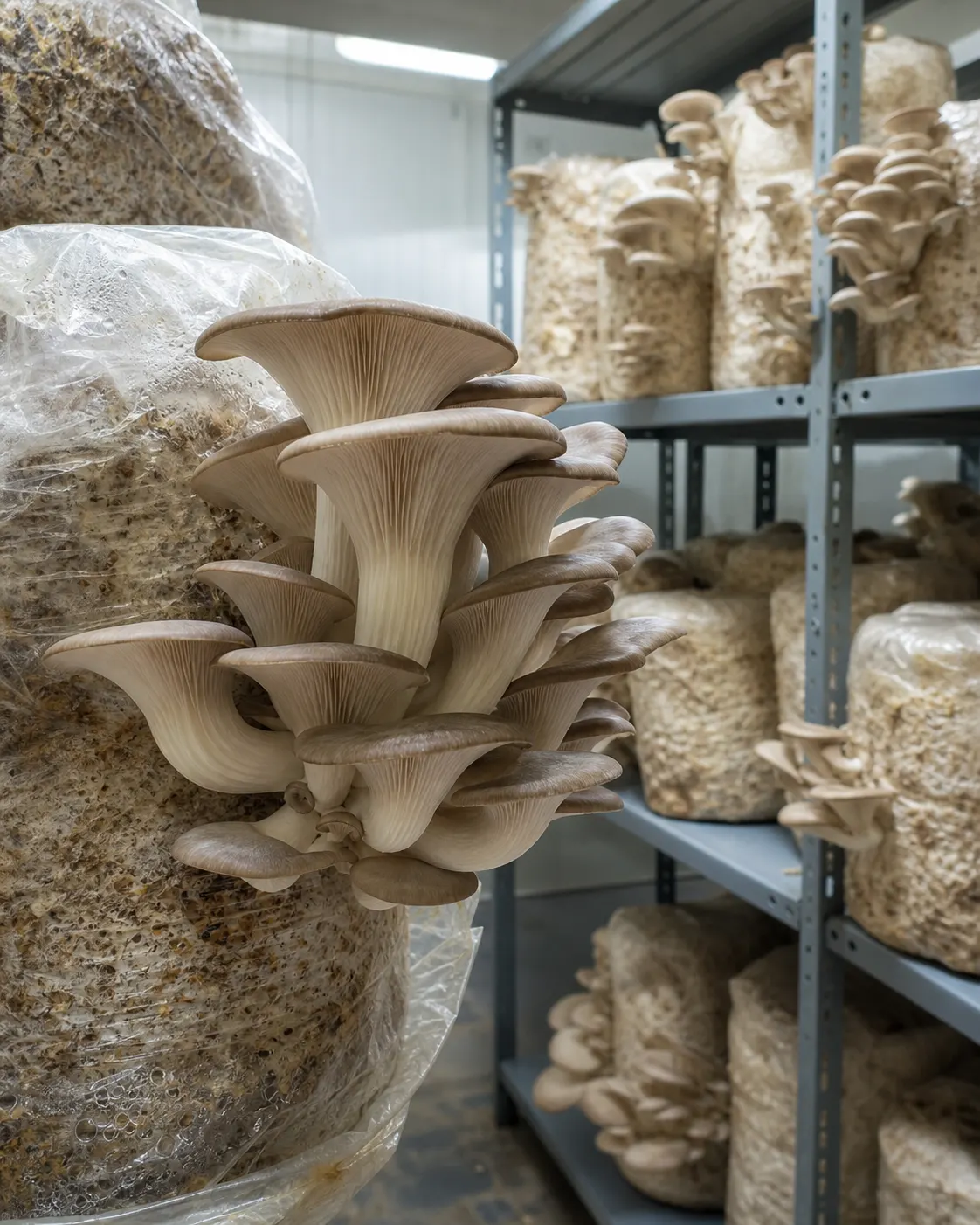
Booklet
Package and Practices on Mushroom Cultivation
Dr. Vikas Gupta
Comprises complete package practice for cultivation of different mushrooms and spawn production technique as well as management of pests under temperate conditions for mushroom growers and students
AU/DEx/500-Bl/07/2026 · 31 Jul 2026